
Guide
How a Chemical Overhaul Permanently Stops Recurring Aircon Water Leaks
If chemical washes haven't stopped the leak, the drain pan and coil are too clogged for surface cleaning. Here's how a full overhaul fixes the source.
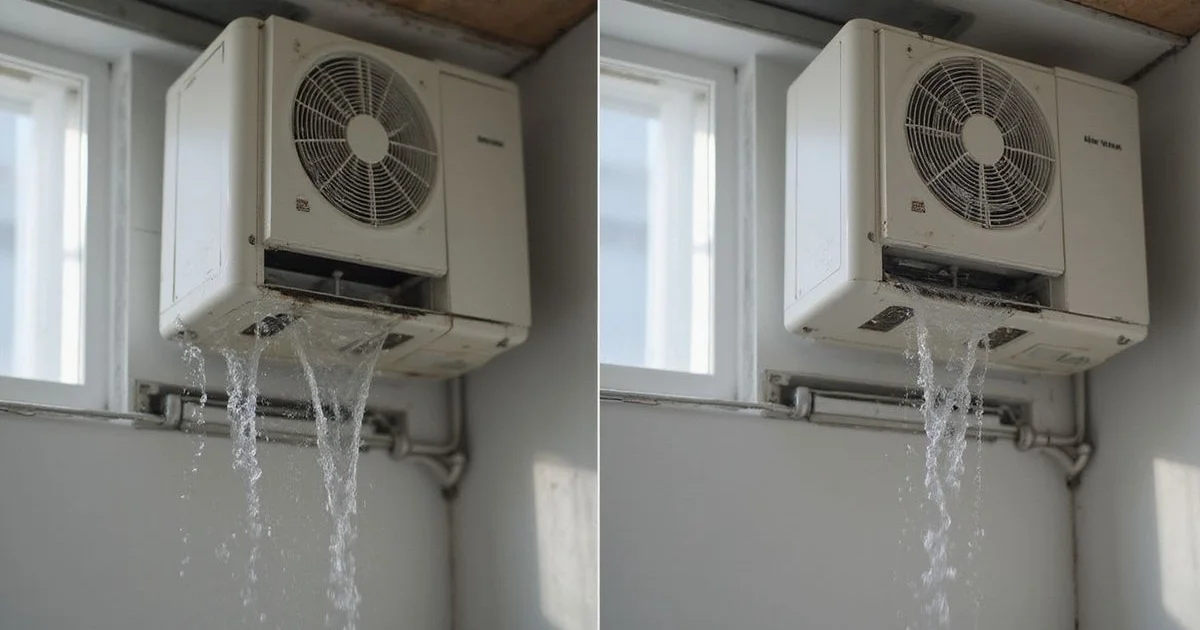
You already know the frustration of a lingering drip after a standard wash. Our technicians see this daily across Selangor, and it usually means the internal components are too choked with grime for a basic flush to work. A quick spray simply cannot dissolve the thick jelly-like slime lodged deep in the corners of your unit.
This persistent blockage forces water to find another way out.
For a broader look at common triggers, our complete guide on aircon water leak causes and fixes details exactly what goes wrong. Let’s examine the data behind these stubborn blockages, what a full teardown actually removes, and how to permanently restore your system.
Why some aircon leaks won’t stop
The short answer is that a standard wash leaves thick layers of mold and bacteria behind. Our local climate directly fuels this problem.
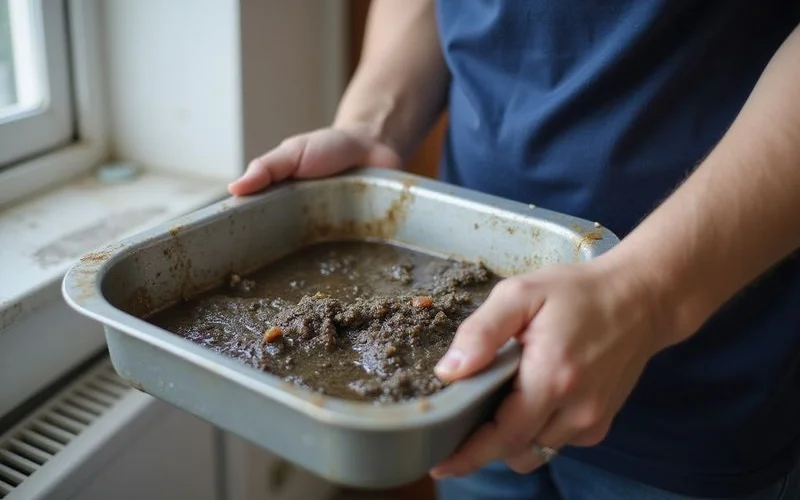
Malaysia experiences high average humidity throughout the year. This moisture creates the perfect breeding ground for a thick, jelly-like biofilm to grow inside the Fan Coil Unit (FCU). A standard wash only sprays an alkaline cleaner onto the visible metal surfaces before rinsing.
Water pressure from a standard rinse cannot force that dense slime out of the tight corners of the drain pan. The drainage path remains partially blocked. Condensation eventually backs up, overflows the tray, and causes a fresh leak just a few days later.
Here are the signs your unit suffers from severe biofilm buildup:
- A persistent sour or musty smell immediately after turning the unit on.
- Visible black flakes blowing out of the air vents.
- Water dripping from the corners of the indoor casing.
- A jelly-like substance visible near the filter tracks.
What an overhaul does differently
An overhaul permanently stops the leak by completely dismantling the indoor unit to physically remove stubborn blockages. We take the system apart so no corner is left uncleaned.
This service targets the hidden areas that a standard wash cannot reach. The process involves removing specific parts and treating them with heavy-duty, coil-safe alkaline chemicals.
The Complete Dismantling Process
Our technicians perform several key steps to ensure a clear drainage path. Every critical component is isolated.
- Drain pan removal: The tray is scrubbed, soaked, and sterilised to eliminate all jelly-like biofilm.
- Evaporator coil detachment: The bottom surface gets exposed, allowing us to clean the tightest fins from all angles.
- Drain line back-flushing: Pressurised water clears the entire pipe from both ends to remove deep clogs.
- Blower wheel extraction: We pull out the cylindrical fan to wash away the heavy grime that often drips back into the pan.
- Full sanitisation: A targeted chemical treatment kills the bacterial roots to prevent the slime from returning quickly.
Once reassembled, the unit operates with a genuinely clear internal water path. The leak source is eradicated, rather than just temporarily suppressed.
Before/after outcomes
The immediate result is a dry, leak-free air conditioner, followed by significant long-term energy savings. We consistently see dramatic improvements in both cooling performance and monthly electricity costs.
A severely clogged unit struggles to breathe. Recent 2026 energy data from local platforms like Recommend.my indicates that a dirty air conditioner uses 15% to 25% more electricity just to maintain room temperature. Removing that restriction completely transforms the system’s efficiency.
Expected Performance Timeline
You can expect specific improvements over the course of a year.
| Timeline | Cooling & Drainage Result | Efficiency Impact |
|---|---|---|
| Day 1 | Zero drips, clear water flow | Instant boost in airflow (CFM) |
| Week 1 | Musty smells eliminated | Room cools down noticeably faster |
| Month 1 | Filters remain largely dust-free | Lower TNB electricity consumption |
| Year 1 (with quarterly servicing) | Consistent, dry operation | System performs like a newly installed unit |
Our maintenance records show that combining this deep clean with quarterly servicing prevents the biofilm from ever reaching critical levels again. This proactive approach protects your walls and floors from future water damage.
When to go straight to overhaul
You should bypass a standard wash and book an overhaul if your unit is over five years old and has a history of repeating leaks. Our experience shows that paying for basic servicing on a heavily choked system is a waste of money.
Frequent usage in dusty, urban environments accelerates the buildup of grime. A standard cleaning takes about 45 minutes, while a full dismantling takes our team nearly two hours per unit.
If you recognise your system in the scenarios below, a deep clean is the most economical choice:
- The unit has dripped multiple times after recent basic services.
- You live in a high-traffic Selangor area with heavy daily air conditioner usage.
- You can physically see a thick layer of black slime when lifting the front cover.
- The system has never been fully dismantled since installation.
If you are unsure of the internal condition, an honest assessment visit provides clarity. We will inspect the evaporator coil and tell you exactly which service will permanently fix your specific drainage issue.
What an overhaul won’t fix
This service exclusively resolves leaks caused by dirt, biofilm, and poor drainage. We must use different repair methods for mechanical failures or physical damage.
While dirty coils account for the vast majority of indoor water issues, a deep chemical clean cannot repair broken hardware. Our diagnostic process identifies these specific component failures before any work begins.
Hardware Failures Requiring Separate Repairs
If water is dripping for the following reasons, a chemical treatment is not the correct solution:
- Failed Condensate Pump: If your office or condo uses an Acson ESI-FLO or Aspen pump to push water upwards, a broken motor requires a full part replacement.
- Frozen Coil from Gas Leaks: Low R32 or R410a refrigerant causes ice to form and melt outside the drain pan. This requires a pressure test and a gas top-up.
- Damaged Armaflex Insulation: Degraded foam tubing causes condensation to sweat directly through the ceiling or walls, requiring fresh insulation wrapping.
We will always diagnose the exact root cause before providing a quote. If a deep clean is not the correct answer, we will recommend the targeted repair that actually resolves your issue.
For a detailed breakdown of the chemical overhaul service itself, including our current pricing and a full list of inclusions, check out our main service page.
Related reading: Still deciding? You can also read our guide on Chemical Wash vs Chemical Overhaul: Which Does Your Aircon Need?.