
Guide
Aircon Leaking Water: Causes and Fixes
Most aircon water leaks come from a blocked drain line. Frozen coils, damaged insulation and condensate pump faults are next. Here's what's likely and how it's fixed.
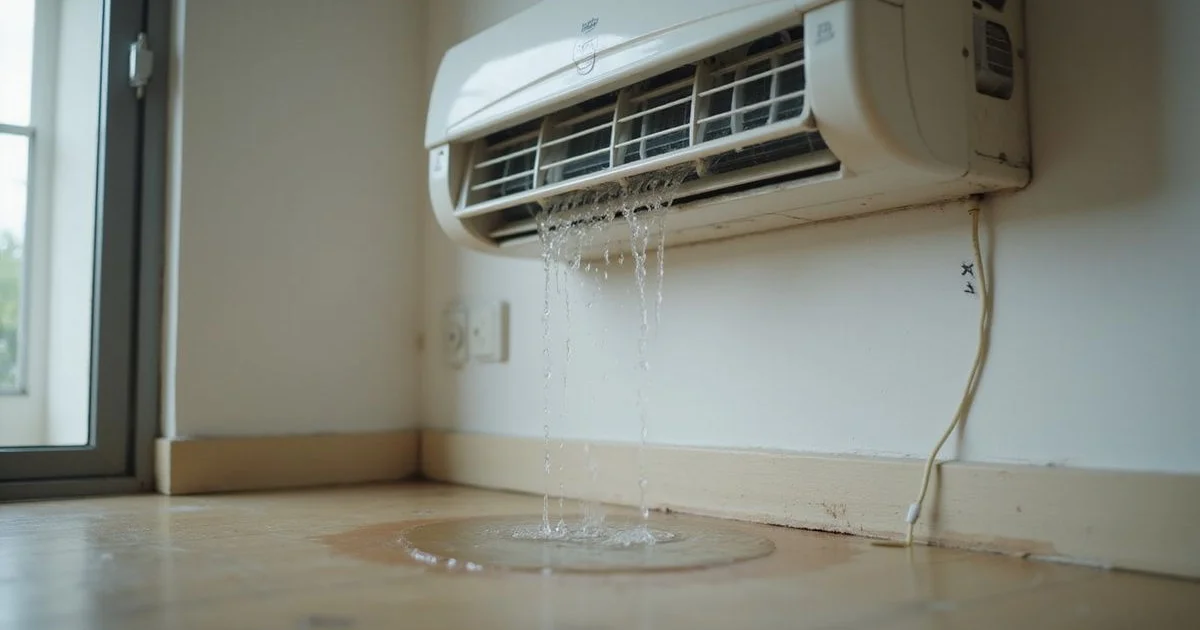
Why aircon leak water indoors
We often hear from Cheras homeowners who wake up to a sudden puddle on their bedroom floor. This happens because your indoor unit pulls moisture out of the warm air as it cools the room. That water typically collects on the evaporator coil, runs into a drain pan, and safely exits through a drain line to the outside.
Our local climate makes this process work overtime. The average humidity in Selangor sits at around 80 percent year-round. This constant moisture forces your air conditioning system to extract a massive volume of water every single day.
We see many systems struggle under this heavy load. When any part of that drainage path gets blocked, water quickly finds another way out. That alternate route is usually right onto your wall or floor, causing an annoying aircon leaking water issue.
Our team can almost always identify and fix these leaks on a single visit. Most water leaks fall into four specific categories. Let’s look at the data to explore a few practical ways to respond.
Cause 1: Blocked drain line (most common)
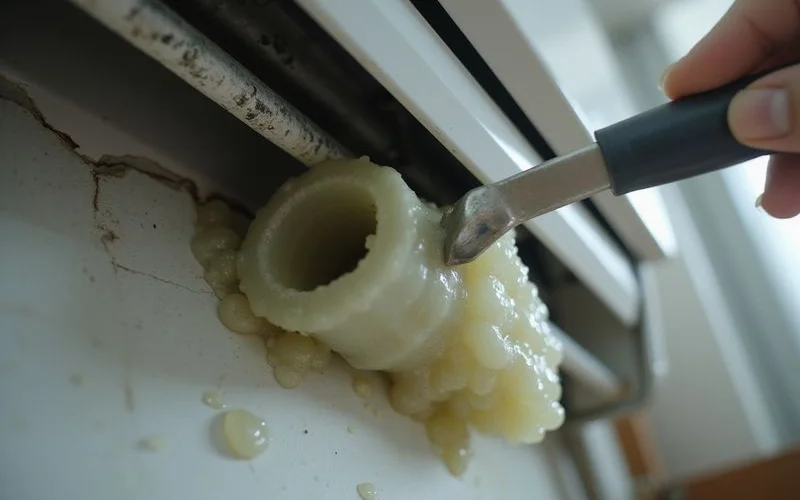
We frequently pull a jelly-like sludge out of residential systems across the Klang Valley. The most frequent culprit behind an aircon dripping water is a simple clog in the exit pipe. Dust, mould, and everyday airborne debris mix with the constant stream of condensate water inside the system.
Our recommended aircon leak fix involves completely clearing the drain line using a specialized flush. The slime gradually builds up inside the standard 15mm or 20mm PVC drain pipes used in most Malaysian homes. Pressure eventually builds behind the blockage, causing the drain pan to overflow directly into your living space.
We know that a quick surface vacuuming often just postpones the next blockage for a few weeks. The deep clean dissolves the bio-slime entirely and restores proper water flow. Routine maintenance prevents this sticky buildup from returning.
- The Warning Sign: Water dripping continuously from the front panel.
- The Hidden Danger: Algae growth accelerates rapidly in hot weather.
- The Proper Fix: Chemical flushing of the internal PVC pipe.
- The Prevention: Regular maintenance every three to four months.
Cause 2: Frozen evaporator coil melting
Our first step is to find exactly why the coil froze in the first place. A frozen coil occurs when restricted airflow or low refrigerant gas causes the internal temperature to drop too far. The moisture from the air literally freezes onto the copper coils instead of dripping into the pan.
We usually receive calls about this issue after the unit has been running all night. When the system eventually turns off, all that accumulated ice rapidly thaws. This sudden rush of melting water completely overwhelms the small drain pan, resulting in a severe aircon water leak.
Our technicians often find the root cause is a severely dirty air filter blocking the fan. Another common trigger is a slow leak of R32 or R410A refrigerant gas. You must address the underlying airflow or pressure problem to prevent this from happening again.
How to Address a Frozen Coil
We advise turning off the unit immediately to let the ice melt naturally. Place dry towels directly under the unit to catch the massive overflow. Check and wash your primary air filters.
Our service crew can then safely check the gas pressure levels. Proper gas levels keep the coil at the correct cooling temperature. Clean filters ensure smooth airflow across the metal fins.
Cause 3: Damaged Armaflex insulation
We regularly see thin or degraded insulation failing to handle Selangor’s 80 percent humidity. The thick black foam wrapped around your copper pipes prevents warm room air from hitting the freezing cold metal. This material is typically made of Class O Armaflex or similar high-grade rubberized foam.
Our typical aircon repair process involves replacing the damaged sections with appropriate materials. Condensation immediately forms on the bare copper when this protective layer cracks or splits. The moisture drips steadily along the exposed pipe and ends up pooling inside the casing.
Insulation Warning Signs
We want you to spot failing insulation before a major leak occurs. Visible cracks or tears often appear in the black foam covering. Water stains might form on your ceiling directly behind the unit.
Our repair team uses insulation with a thickness of at least 9mm to 13mm to effectively prevent sweating. Sometimes, the exposed copper requires minor corrosion treatment before wrapping the new foam. This targeted fix eliminates the condensation completely.
Cause 4: Condensate pump failure
We often install reliable replacement units like the Little Giant or Value M1 condensate pumps to resolve overhead drainage issues. Some installations utilize a small mechanical pump to push water up to a ceiling drain when standard gravity flow is impossible. This setup is incredibly common in commercial offices and homes with ceiling cassette units.
Our standard replacement procedure is straightforward and restores function immediately. These local pump favorites can handle up to 36 liters per hour safely. Their internal float switches are highly sensitive to dirt and debris.
We find that the same bio-slime that clogs pipes will eventually jam the moving parts inside the pump. Water simply collects inside the reservoir until it overflows onto the floor.
Pro Tip: If your pump is making a loud grinding noise before a leak starts, the motor is likely failing and needs immediate replacement.
Quick home checks before calling
Our experience shows that you can narrow down the root cause with two quick visual inspections. This helps you communicate the exact problem to the technician before they arrive. Safety is the priority, so perform these checks from the ground without opening the main casing.
We highly recommend reviewing these specific areas.
- Look at the indoor unit: Switch the power off at the wall immediately if you see solid ice on the copper pipes.
- Let the unit thaw completely for two to three hours before scheduling a repair.
Our team always checks the outdoor drain outlet next.
- Look at the drain outlet outside: You should see water dripping steadily from the exterior PVC pipe when the system runs.
- The line is undoubtedly blocked if the ground is completely dry while the indoor unit is leaking.
We know that a basic surface wipe simply will not last when the internal drainage network is compromised. Proper diagnostics prevent further water damage to your home. Professional intervention is the safest route for a lasting fix.
When a chemical wash is the right answer
We utilize specialized, non-corrosive alkaline chemicals to break down the stubborn slime and mold. A heavy blockage deep inside the system requires professional intervention. The drain pan and internal evaporator coil are heavily clogged if leaks keep returning despite basic drain clears.
Our team finds that a standard chemical wash often resolves this issue completely and restores cooling performance. This deep clean is significantly more effective than a normal service, which only uses water and a soft brush. The chemical solution easily reaches the hidden areas of the coil fins where bacteria thrive.
Comparing Service Options
We want you to make an informed decision based on clear service differences. You can see the distinct value of each cleaning method below. Regular maintenance prevents sudden breakdowns during the hottest months.
| Service Type | Average 2026 Price (Selangor) | What It Does |
|---|---|---|
| Basic Cleaning | RM 85 - RM 99 | Surface wash with water. Good for light dust, but leaves hidden mold intact. |
| Chemical Wash | RM 120 - RM 160 | Alkaline flush. Dissolves bio-slime, clears drain pipes, and stops persistent leaks. |
Our service technicians recommend booking a deep clean at least once a year to prevent sudden water damage. A full chemical overhaul is the lasting fix for severely neglected units. This advanced process involves completely dismantling the indoor unit to individually clean every single component.
We know that stopping an aircon leaking water early saves you from expensive structural repairs. It also keeps your monthly electricity bills from slowly creeping up. Contact our licensed technicians today to schedule an inspection and keep your home perfectly dry.
Related reading: Still deciding? You can also read our guide on Aircon Error Codes Explained: Daikin, Panasonic & Acson Blinking Lights.