
Guide
Signs Your Aircon Needs a Chemical Wash (Not Just a Normal Service)
Persistent musty smell, visible mould, weak airflow despite cleaning, allergy symptoms when the aircon runs — clear signs you've moved past 'normal service' territory.
When a normal service isn’t enough
Our team regularly observes that Selangor’s year-round 80% humidity creates the perfect breeding ground for deep-seated grime.
Standard quarterly servicing handles routine maintenance perfectly well.
You can expect technicians to clean filters, perform a surface coil rinse, and run a quick drain check, but there is a specific category of issues that a regular service genuinely cannot fix. We find that the four indicators below are the most common signs aircon needs chemical wash treatment, and any single one of them is reason enough to book a deeper clean.
Sign 1: Musty smell returns despite a recent service
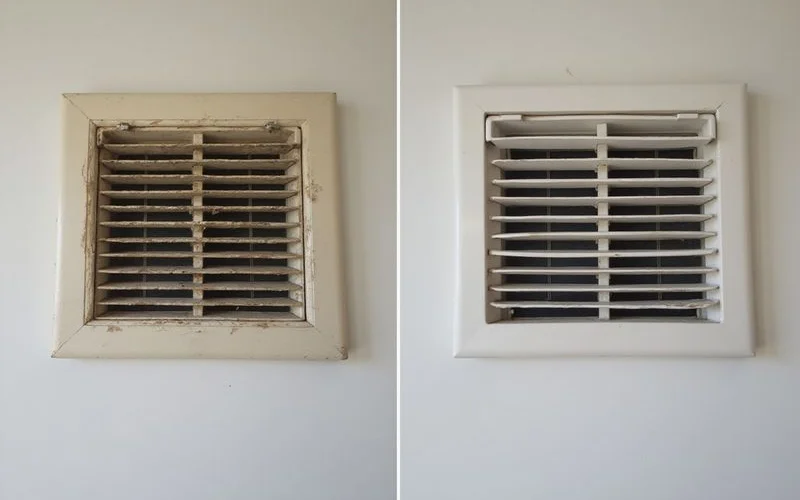
A returning musty smell indicates that mould growth has taken root deep inside the unit where a basic surface rinse cannot reach. If you had your aircon serviced last month and that damp odour is already back, the colony inside the fins is rapidly regrowing.
Our technicians frequently see this exact cycle in Malaysian homes. Surface washing essentially just gives the fungus a haircut.
Here are the common reasons a standard wash fails to cure bad smells:
- Superficial reach: Low-pressure water spray only cleans the outer 10% of the coil block.
- Surviving spores: Water does not kill mould spores or bacterial slime.
- Rapid regrowth: Surviving colonies reproduce within 24 to 48 hours in warm, damp conditions.
- Hidden drip pans: Standard cleaning often misses the heavy sludge trapped at the back of the drain pan.
Research from Universiti Kebangsaan Malaysia (UKM) reveals that approximately 83.2% of Malaysian residences have serious mould contamination. Fungi thrive aggressively when indoor humidity consistently stays above the 60% threshold.
We recommend a chemical wash to address the actual source of the odour. The alkaline solution foams up and pushes the embedded biological growth out from between the metal fins.
Sign 2: Visible black mould on the coil or louvres
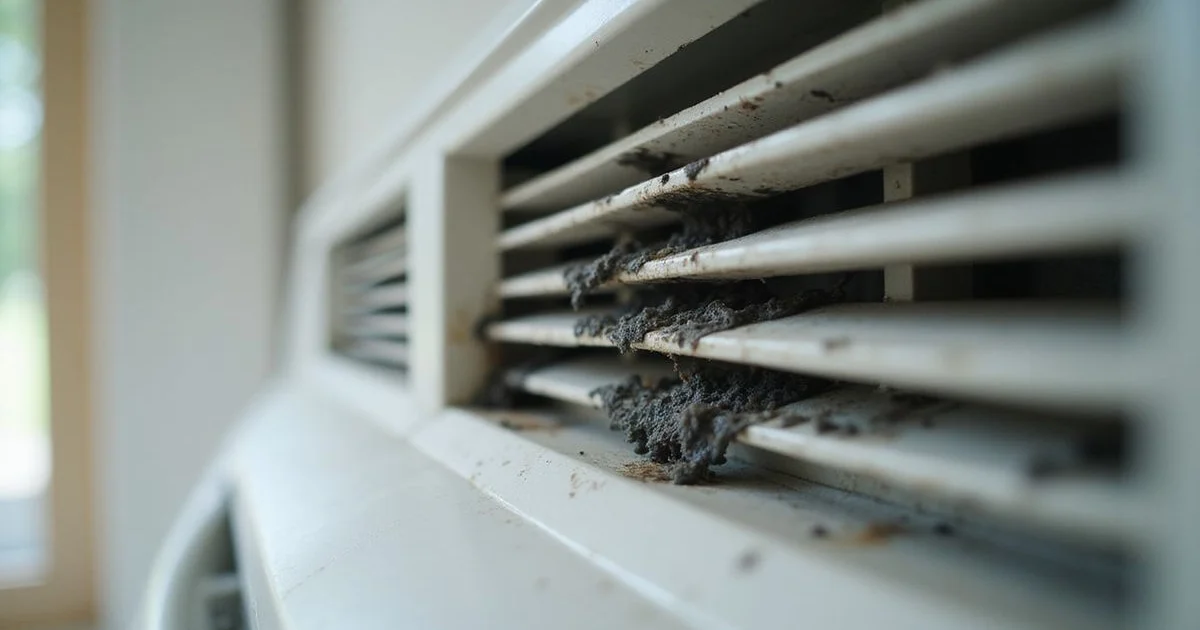
If you are wondering, ‘do I need chemical wash,’ seeing dark patches inside the unit provides a definitive answer. The fungal growth is actively shedding spores into your room every time the fan runs, which you might spot on the directional louvres, through the gap onto the coil fins, or right on the spinning blower wheel.
Our crews consider visible growth a non-negotiable red flag. Waiting to treat it only spreads the contamination further across your walls and furniture.
Aspergillus and Cladosporium are two of the most prevalent mould species found inside local air conditioning units. These specific strains reproduce rapidly in the dark, damp environment of the indoor blower.
The table below illustrates why a targeted approach is necessary for visual growth.
| Treatment Type | Visual Mould Removal | Spore Eradication |
|---|---|---|
| Standard Water Wash | Clears loose surface debris | Ineffective against embedded spores |
| Chemical Wash | Dissolves thick fungal clusters | High kill rate for lingering bacteria |
We always apply a sterilising chemical treatment when visible spots appear. Taking immediate action stops the colony from damaging the plastic components of your blower cylinder.
Sign 3: Weak airflow even after filter cleaning
Clogged coil fins block air from circulating and will drastically reduce your cooling efficiency. You might have clean filters, open vents, and the fan running on maximum speed, yet the air still feels incredibly lazy.
Our performance tests show that the cause is almost always a thick layer of grime sealing the tiny gaps in the evaporator coil. Water pressure alone simply cannot dissolve this hardened barrier of dust and natural oils.
The Cost of Restricted Airflow
According to data from the U.S. Environmental Protection Agency, a buildup of just 0.042 inches of dirt on an air conditioning coil can reduce system efficiency by up to 21%. Your compressor has to run significantly longer to achieve the desired room temperature, which directly translates into a spike on your monthly electricity bill.
We use an alkaline-based cleaner to melt away this restrictive buildup and open up the air passages. If a chemical wash does not fully restore your airflow, the next logical step is a complete overhaul.
Most airflow issues do resolve completely at the wash stage. Regular chemical maintenance prevents the dirt from ever reaching that critical, efficiency-killing thickness.
Sign 4: Allergy symptoms when the aircon runs
Sneezing, itchy eyes, and a scratchy throat that appear specifically when the aircon runs are major aircon deep clean signs pointing directly to a contaminated coil. Airborne mould and bacteria from a dirty blower wheel trigger these exact immune reactions.
Our technicians frequently serve households where poor indoor air quality has become an urgent health concern. The air conditioner acts as a distribution system for whatever microorganisms are growing inside the plastic casing.
The Allergy and Immunology Association Malaysia reports that 30% to 40% of Malaysians suffer from allergic rhinitis and sinusitis issues. Poor indoor air quality is a massive contributing factor to these daily respiratory struggles.
Protecting Sensitive Household Members
For families with asthma sufferers, allergy-prone children, or elderly members, this is the most critical warning sign to watch for. Children possess developing respiratory systems, meaning they breathe in a proportionately higher dose of spores relative to their body weight.
We strongly advise scheduling a deep clean if symptom flare-ups align with your aircon usage. The chemical treatment strips away the bacterial slime and sanitises the airflow pathway.
Breathing clean, chilled air should be a relief, not a trigger for a coughing fit.
Bonus sign: water leaks despite a recent service
Persistent leaking often means the drain pan or PVC pipe is choked with a thick, jelly-like buildup called zooglea. If a recent blast of compressed air down the drain line did not stop the dripping water, the blockage is much more severe.
Our field experience shows that this gelatinous slime forms when airborne bacteria mix with continuous condensation. A standard surface wash lacks the chemical properties needed to break down this sticky mass.
The vast majority of these stubborn leaks are resolved with a thorough chemical wash paired with a direct drain-pan scrub. The solution dissolves the biofilm, allowing the condensation to flow freely outside again.
Don’t wait, the cost only grows
Mould, biofilm, and slime get progressively harder to remove the longer they sit inside your unit. Booking a chemical wash today addresses the problem comfortably and prevents permanent damage to the components.
We constantly remind customers that waiting another six months changes the required treatment entirely. You will likely need a full chemical overhaul to get the same result, which involves dismantling the entire unit.
In the Klang Valley, a standard chemical wash generally runs between RM 130 and RM 160 per unit, whereas a full overhaul easily costs double that amount. The honest call is to do it now rather than later, so reach out to schedule your service today and protect your indoor air quality.
Related reading: Still deciding? You can also read our guide on Aircon Chemical Wash Price in Malaysia: What to Expect.