
Guide
What Is an Aircon Chemical Wash, Exactly?
A chemical wash uses a degreaser to dissolve mould and grime that a normal rinse can't reach. Here's the step-by-step procedure and what it actually cleans.
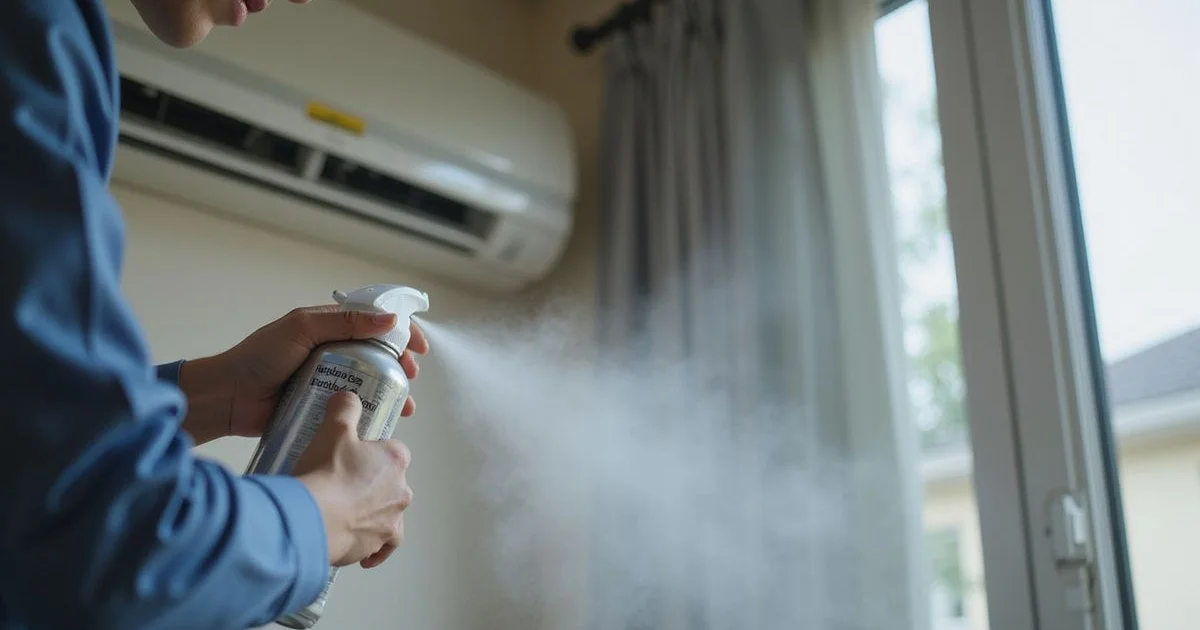
As a property owner in the Klang Valley, you already know how quickly a reliable air conditioning unit can start underperforming.
We see this scenario every day across Cheras and Selangor.
A sudden spike in your monthly TNB electricity bill often points directly to a clogged, struggling system.
Our technicians understand that basic maintenance sometimes fails to resolve these deep-seated efficiency issues.
Let’s look at the data on how dirt affects cooling, clearly define what is aircon chemical wash, and outline exactly when this service is necessary.
What a chemical wash actually is
A chemical wash is a specific procedure using commercial-grade coil degreaser to dissolve grime that water alone cannot shift. We typically use an alkaline-based foaming cleaner for this exact process.
Alkaline solutions safely remove organic residue, grease, and biological growth without damaging the delicate copper coils.
“A chemical wash is not just about cold air; it is about protecting the machine. Using alkaline foam dissolves the organic slime that causes water leaks, without corroding the copper coils inside.”
Our local climate plays a massive role in this rapid buildup. With Malaysia’s average humidity hovering around 85%, moisture constantly sits inside your unit.
This damp environment breeds mould and biofilm deep within the evaporator fins. We rely on these specialized chemicals to penetrate those tight spaces and flush the contaminants away.
What you are left with is a coil that is clean inside and out, not just on the surface.
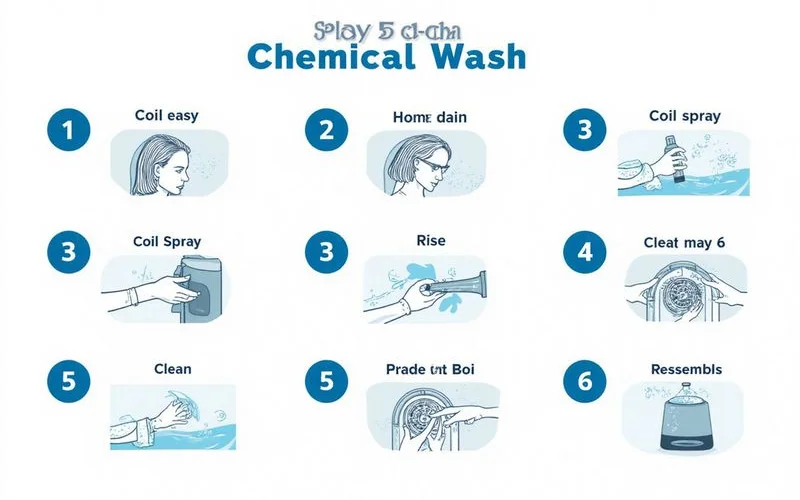
The step-by-step procedure
This is what a proper aircon chemical wash procedure looks like from start to finish. We follow a strict protocol to ensure your equipment is thoroughly cleaned and protected.
Every single step focuses on restoring optimal airflow and cooling performance.
1. Assessment
Before opening anything, the technician confirms a chemical wash is actually needed. We often check your recent TNB electricity bills and measure current airflow during this stage.
A sudden jump in energy costs usually indicates a heavily clogged coil. Our team will clearly tell you if a standard service is enough to solve the problem.
You can count on honest advice before any work begins.
2. Site protection
Plastic sheeting and drop cloths go on walls, floors, and furniture beneath the indoor unit. We secure heavy-duty canvas catchment bags around the air conditioner to contain all runoff.
This physical barrier is completely mandatory. Our technicians ensure the chemical and rinse water have somewhere to go that is not your home.
Protecting your property is just as important as cleaning the machine.
3. Filter removal and cleaning
Filters come out, get washed separately, dried, and put aside for reinstallation. We prioritize this step because clogged filters severely restrict airflow.
The US Department of Energy estimates that simply swapping or cleaning a blocked filter provides immediate benefits:
- Reduces system energy consumption by 5 to 15 percent
- Prevents dust from insulating the evaporator coil
- Improves the indoor air quality of your room
Our process ensures these screens are entirely free of dust before they go back in.
4. Chemical application
Coil degreaser is sprayed onto the evaporator coil, blower wheel, and drain pan. We allow the alkaline foam a dwell time of 5 to 10 minutes to properly break down the grime.
Skipping or shortening this vital reaction period turns an expensive procedure into a basic rinse. Our preferred chemicals safely dissolve the compacted dirt that water cannot penetrate.
5. Thorough rinsing
The chemical and dissolved grime get rinsed away with a controlled water flow. We use high-pressure sprayers to flush the drain pan and the entire drain line.
Clearing this line removes the jelly-like algae blockages that cause annoying water leaks in many Cheras homes.
“Flushing the drain line is just as critical as cleaning the coils. Most indoor water leaks happen because biofilm clogs the exit pipe, forcing condensation to overflow into your living room.”
Our thorough rinse ensures no chemical residue remains on the internal parts.
6. Sterilising treatment
This optional anti-microbial treatment is highly recommended for units in humid environments. We apply this specialized coat to kill any remaining mould spores and bacteria clinging to the coil after the rinse.
Selangor’s sticky climate makes this step particularly valuable for preventing rapid regrowth. Our technicians use this treatment to keep the air smelling fresh for much longer.
7. Reassembly and test
The unit is reassembled, powered on, and tested for cooling, airflow, drainage, and smells. We use a digital thermometer to measure the temperature drop across the coil.
A healthy system should blow air that is at least 8 degrees Celsius cooler than the room temperature. Our team addresses any lingering issues right there before leaving your property.
What it actually cleans
A chemical wash specifically targets the hidden buildup that ruins energy efficiency. We remove the specific contaminants that force your compressor to overwork.
According to the US Department of Energy, dirty condenser and evaporator coils can increase compressor energy consumption by up to 30 percent. If you have ever wondered what does chemical wash do, our deep cleaning process directly addresses the following issues:
- Mould and bacteria colonies thriving on evaporator coil fins
- Thick grease and grime baked onto the blower wheel
- Slime and biofilm pooling in the drain pan
- Algae and debris clogging the main drain line
- Compacted dust packed deeply between the internal coil fins
A normal service can easily clean filters and accessible surfaces. We know it cannot reach into the coil fins or into the drain pan the way a chemical treatment does.
This is exactly why basic wiping often fails to stop a unit from blowing warm air.
| Feature | Standard Service | Chemical Wash |
|---|---|---|
| Primary Focus | Accessible dust and filters | Deep coil and internal grime |
| Chemicals Used | Water and mild soap | Alkaline coil degreaser |
| Energy Savings | Minor (5 to 15%) | Significant (up to 30%) |
| Best For | Light routine maintenance | Heavily soiled or leaking units |
When you actually need one
Every 6 to 12 months is the ideal timeframe for most homes, depending on daily usage and local dust load. We often see properties in Cheras running their units 8 to 12 hours a day, which accelerates dirt buildup.
You need this service immediately if you notice any of these four warning signs:
- A sudden, unexplained spike in your TNB electricity bill
- Water dripping from the indoor unit onto your floor
- A sour or musty smell blowing into the room
- Visible black mould growing on the air louvres
Our honest policy is simple. If your unit is reasonably new, lightly used, and free of those symptoms, a standard service is enough.
We will actively tell you that instead of pushing a higher tier when it is not warranted.
For the full pricing and booking flow, see our aircon chemical wash service page.
Related reading: Still deciding? You can also read our guide on Aircon Chemical Wash Price in Malaysia: What to Expect.