
Guide
Signs Your Aircon Needs a Gas Top Up (and Why a Leak Check Comes First)
Weak cooling, ice on copper pipes, longer running times and a hissing sound all point to low refrigerant. Here's why a top-up alone may not fix the problem.
We frequently see homeowners in Cheras and the wider Klang Valley treat a gas refill as routine maintenance. Refrigerant actually circulates inside a sealed loop, meaning it does not just magically disappear over time. Recognizing the signs aircon needs gas top up is your first line of defense against repeated, unnecessary costs.
Our technicians know that a drop in gas levels always points to a specific leak in the system.
Fixing the root cause is the only permanent solution.
Four telltale signs aircon needs gas top up
These four signs indicate your aircon lacks refrigerant, and the immediate next step is a thorough leak check. Our team always stresses that diagnosing the root cause is better than a blind top-up. The following low refrigerant signs are clear red flags.
1. Cooling has weakened over time
The most common sign is a unit that still blows air but fails to cool the room, especially when afternoon temperatures in Malaysia hit 34 degrees Celsius. You will notice the compressor running, but you have to drop the remote setpoint down to 18 degrees just to feel comfortable.
We often find that modern Daikin or Panasonic units using R32 refrigerant are highly sensitive to pressure drops. A loss of even 10 percent of the gas volume drastically cuts cooling capacity. Clean filters and clear coils rule out airflow blockages, leaving aircon low gas as the primary suspect.
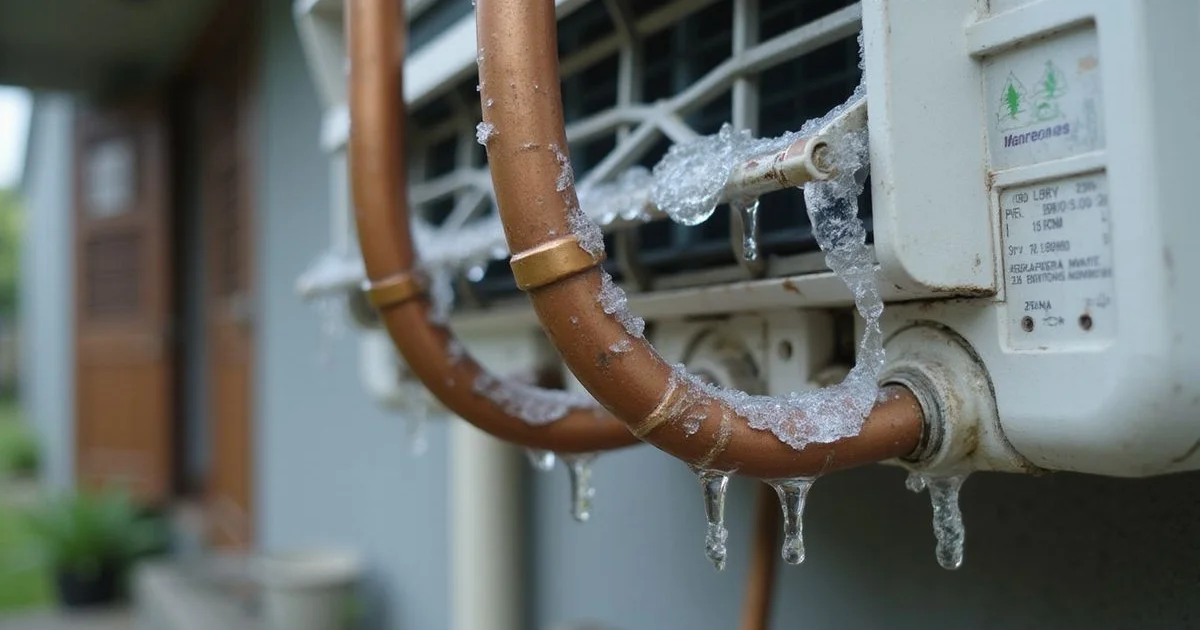
2. Ice forming on copper pipes outside
A sudden drop in refrigerant pressure causes the evaporator coil to become unnaturally cold, freezing the ambient condensation onto the copper pipes. You will typically spot white frost building up on the valve connections at the outdoor unit after the system runs for an hour.
Our technicians strongly advise switching off the unit immediately if you see this ice buildup. Running an air conditioner with a frozen coil forces liquid refrigerant back into the compressor. This liquid slugging will easily destroy an inverter compressor, turning a simple repair into an RM1,000 replacement job.
3. Longer running times for the same comfort
An air conditioner lacking gas will run constantly to compensate for its reduced cooling output. This non-stop operation directly impacts your monthly electricity usage.
We regularly see households jump from the standard TNB domestic tariff block into the higher 51.60 sen per kilowatt-hour tier simply because a leaking unit never stops pulling power. A sudden 30 percent spike in your 2026 TNB bill often signals an overworked compressor and indicates the aircon needs refill.
4. Faint hissing sound near pipe joints
Because newer units operate at high pressures, a small leak can sometimes produce a soft hissing noise. You might hear this subtle sound near the indoor flare nut connections or the outdoor service valves on a quiet day.
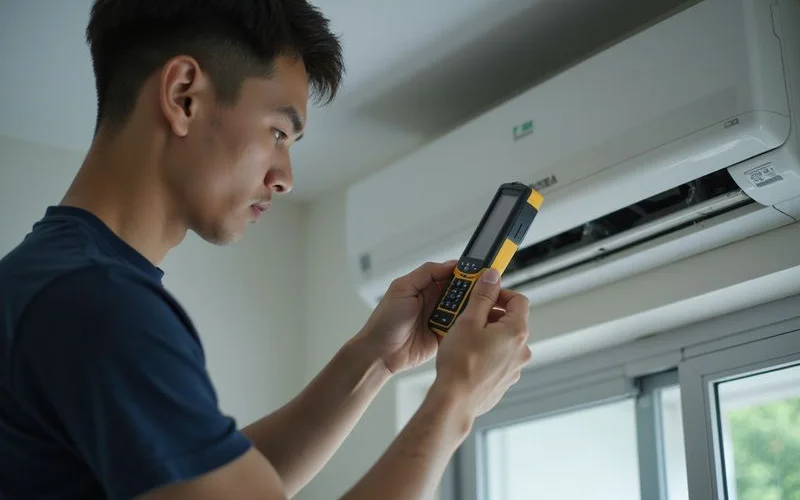
Our electronic sniffers detect leaks instantly, but your own ears can serve as an early warning system. Combining this audible hiss with weak cooling guarantees a pressure issue.
Why a leak check comes first
Topping up an air conditioning system without finding the exit point wastes your money and harms the environment. The gas escapes through a specific hole, a degraded flare joint, or a faulty valve core. We always perform a comprehensive diagnosis because a blind refill might only last a few weeks.
A proper aircon gas top up starts with a precise electronic leak check. Technicians today use advanced heated diode sniffers, like those from Inficon or Fieldpiece, to pinpoint micro-leaks along the copper pipework. Once the source is verified, repairing the flare joint or patching the copper ensures you are paying for a permanent fix.
The “no blind refills” policy
Refilling a leaking system without informing the customer is unethical and goes against good servicing standards. Environmental guidelines in Malaysia strongly discourage venting refrigerants into the atmosphere due to their high global warming potential.
Our company refuses to take payment for a temporary refill unless the client explicitly understands the risks. Finding a microscopic pinhole leak is sometimes challenging, so a transparent action plan is necessary.
If the leak is too slow to detect immediately, we present the following options:
- Targeted leak hunting: We use high-pressure nitrogen tests or UV dye injections to reveal hidden pipe cracks.
- Top-up with monitoring: We refill the unit and track performance over several weeks to calculate the exact loss rate.
- Data-driven repair recommendation: We provide a full assessment comparing a permanent pipe replacement against the age of your unit.
You maintain total control over the next step, backed by honest data.
When the unit is genuinely worth refilling
A gas refill without a major repair makes sense only under very specific, verifiable conditions. Sometimes, a tiny pinhole leak loses less than 5 percent of its pressure over a span of two years.
Our team will honestly advise a simple top-up if the unit is over ten years old and a full copper pipe replacement exceeds the value of the air conditioner itself. Another valid scenario is replacing gas lost during a previous, sloppy service job where valves were not closed properly.
Honest evaluations build long-term relationships with our clients in Selangor. We evaluate each situation logically rather than pushing an expensive repair on every single visit. For more details on identifying these issues yourself, see how to spot an aircon refrigerant leak.
Final Thoughts on AC Gas Maintenance
Ignoring a drop in cooling performance usually leads to higher electricity bills and expensive compressor damage. Spotting the signs aircon needs gas top up early will save you money in the long run.
Our technicians are ready to help you diagnose any issues correctly the first time. Reach out today to book a comprehensive leak check for your property.