
Guide
Signs Your Aircon Needs Servicing — Don't Ignore These
Weak airflow, musty smell, water dripping, rising electricity bill, ice on copper pipes — the most common early signs that your aircon is overdue for a service.
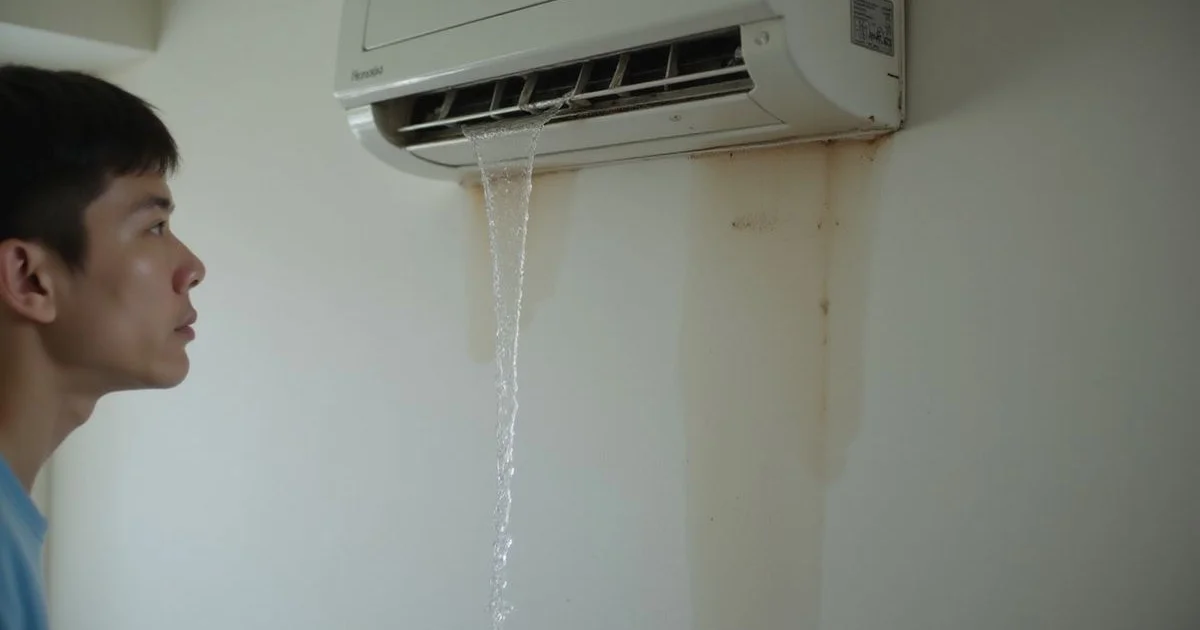
Six early warning signs
We notice a common pattern across commercial and residential properties in Selangor regarding the early signs your aircon needs servicing.
Most cooling system failures are entirely predictable. The equipment usually sends subtle performance warnings for months before a complete breakdown occurs.
Our technicians track these early indicators to prevent expensive emergency repairs. Catching these symptoms quickly is the most effective way to protect your budget.
Here is a breakdown of the exact performance drops you should watch for and how to handle them.
1. Weak airflow from the vent
If you feel the air is lazy and lacks the firm cool blast it used to have, the filter or coil is fouled. Less air across the coil means less cooling, even though the unit sounds like it is working.
Our standard diagnostics in the Klang Valley frequently reveal that the indoor blower wheel is the main culprit. Malaysia experiences extreme humidity, which causes heavy dust to bind tightly to the fan blades.
This buildup forces the motor to work harder and dramatically reduces the volume of air pushed into your room. You can often resolve this early stage with a general service, which currently costs between RM50 and RM85 for a standard 1.0HP wall-mounted unit.
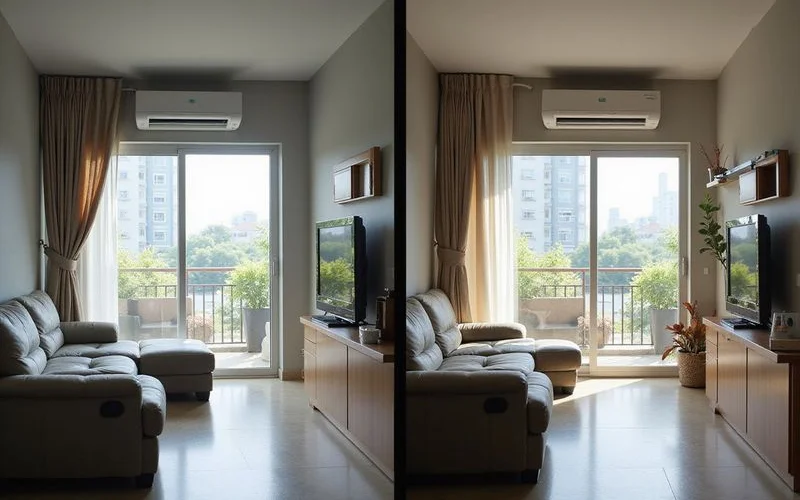
2. Musty smell when you turn it on
That damp, old gym towel smell is mould and bacteria growing on the evaporator coil and in the drain pan. It is a serious health flag because those spores blow directly into your living space or office.
We regularly find hazardous fungal strains inside neglected indoor units. University studies on indoor air quality in Malaysia consistently identify three main culprits thriving in dirty cooling systems:
- Aspergillus: A common mould that can trigger severe respiratory issues in sensitive individuals.
- Penicillium: A fast-growing fungus that produces strong musty odours and allergic reactions.
- Cladosporium: A dark-coloured mould known to exacerbate asthma and cause skin irritation.
A proper service removes the biological source of these contaminants. Our technicians often recommend a chemical wash to fully strip the biofilm from the internal components. This deep-cleaning process uses alkaline solutions to dissolve the stubborn organic matter that a basic wipe-down misses.
3. Water dripping indoors
A blocked drain line or a coil iced over from restricted airflow are the usual causes of indoor leaks. Water eventually finds its way out and ruins your expensive plaster ceiling or stains your walls.
Our repair teams encounter this issue daily across Cheras. A slimy substance called biofilm builds up in the drainage tray and completely clogs the exit pipe.
Ignoring a small drip guarantees a much larger property damage bill later on. You face a stark contrast in costs depending on your reaction time:
| Action Required | Average Cost Estimate (2026) | Consequence of Delay |
|---|---|---|
| Early Drain Flushing | RM50 to RM85 | Clears the blockage entirely. |
| Diagnostic Repair | RM88 base fee | Prevents minor leaks from worsening. |
| Drywall & Paint Repair | RM500 to RM1,500+ | Required if water soaks into walls. |
4. Rising electricity bill
A fouled aircon rarely refuses to work outright. It simply works harder to achieve a much poorer cooling effect.
We actively monitor utility trends, and the 2026 Tenaga Nasional Berhad (TNB) tariff updates make efficient cooling more critical than ever. The new Regulatory Period 4 (RP4) structure sets the base tariff at 45.40 sen/kWh. This adjustment means that wasting power now carries a much heavier financial penalty.
A dirty condenser or blocked indoor filter forces the compressor to run continuously. Industry data confirms that a neglected unit consumes 15% to 25% more energy to cool a standard room due to two main factors:
- Reduced Heat Exchange: Dust insulates the coils, trapping the heat inside.
- Increased Motor Strain: The blower fan draws more amperage to push air through clogged filters.
If your TNB bill has crept up without any change in your household habits, your cooling system is the most likely cause.
5. Ice on the copper pipes outside
Seeing ice on the outdoor connections is a major warning sign, never a normal operating feature. It usually indicates heavily restricted airflow at the indoor coil, low refrigerant levels, or a combination of both.
Our first step is always to shut the system down completely to prevent burning out the compressor. Once the indoor coil freezes properly, all cooling stops entirely. You must call a technician immediately before the internal pressure causes permanent mechanical damage.
A common misunderstanding involves the gas levels. You should note these important facts about modern R32 refrigerants:
- Gas never just evaporates: It operates in a closed loop.
- Leaks require patching: If you are low on R32 gas, there is a physical hole in the copper piping or joints.
- Fix before filling: Proper repair requires finding and fixing the leak before charging you RM130 to RM150 for fresh refrigerant.
6. The room never quite cools
You might set the remote to 22°C, but an hour later the room still hovers at 25°C. The total cooling capacity has dropped, which clearly indicates your aircon needs cleaning.
We see this performance gap frequently in commercial offices that skip their quarterly maintenance schedules. The longer you leave a struggling system to run, the more the internal gunk hardens onto the sensitive evaporator fins. A standard service usually restores normal performance if you catch it early.
Waiting too long forces a shift in the required maintenance approach. Here is a comparison of the different service levels based on how long you delay:
| Service Category | Typical Condition | 2026 Price Range (1.0HP) |
|---|---|---|
| General Service | Maintained every 3-4 months | RM50 to RM85 |
| Chemical Wash | Neglected for 1 year | RM100 to RM150 |
| Chemical Overhaul | Severe blockage, years of neglect | RM150 to RM280 |
Why early service is cheaper
Catching the symptoms in week one means you only pay for a basic service. Wait until month three and you will absolutely need a chemical wash to restore proper airflow.
Our cost analysis shows that delaying maintenance is the most expensive choice you can make. The cost curve is incredibly steep when you look at the progression of repairs:
- Month 1: General service (RM50 to RM85).
- Month 3: Chemical wash required (RM100 to RM150).
- Month 6+: Overhaul and possible compressor repair (RM800 to RM2,000).
Every one of the aircon symptoms listed above acts as a strict warning prompt. None of these mechanical issues get cheaper to fix by ignoring them.
Booking a service when you spot the signs
If you notice any signs your aircon needs servicing, send a WhatsApp message describing exactly what you have noticed with your unit.
Our support staff will review the symptoms to suggest the most appropriate intervention. You can expect a clear process when you contact the office:
- Direct Advice: The team suggests whether a normal service, chemical wash, or full diagnosis is likely needed.
- Clear Estimates: You receive confirmed pricing before a technician is dispatched to your location.
- Transparent Inspections: The RM88 diagnostic fee is fully waived if you proceed with the recommended repair.
- Zero Upselling: The focus remains strictly on fixing the actual problem without pushing unnecessary part replacements.
Schedule your inspection today so you can enjoy a comfortable environment without overpaying on your next TNB bill.
Related reading: Still deciding? You can also read our guide on Aircon Servicing vs Repair: Which Do You Need?.