
Guide
Why Your Aircon Smells Musty (and How to Fix It)
A musty or sour aircon smell is mould and bacteria on the coil and drain pan. Here's why it builds up, why it's a health flag, and how a chemical wash clears it.
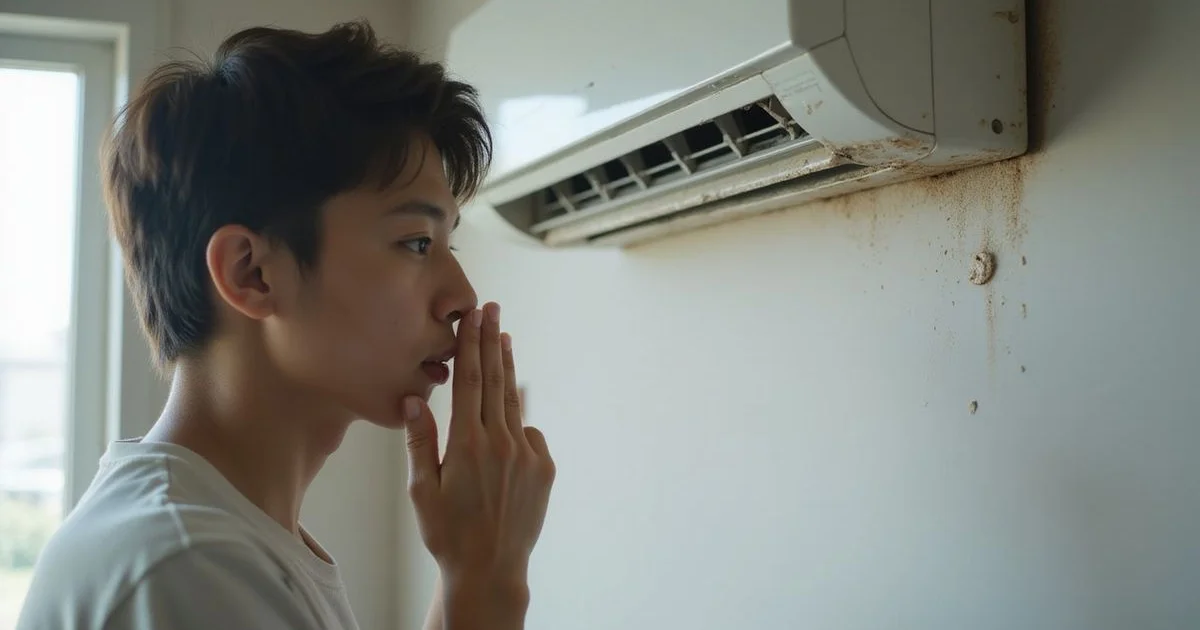
Why aircon develops a musty smell
If your aircon smells bad, you know exactly what that sour, damp odour is like. That specific aircon musty smell blowing from your vent comes directly from airborne mould and bacteria actively growing inside the unit.
We see this constantly across homes in Selangor. Malaysia’s tropical climate maintains an average humidity above 80% year-round. This constant moisture creates the perfect breeding ground for biological growth inside dark, closed-up cooling units.
Our technicians refer to this specific issue as “dirty sock syndrome.”
The odour itself is frustrating. The real concern is that you are breathing in the actual fungal colonies spreading across your indoor coils.
Let’s look at the exact sources of these odours and walk through the proper way to resolve the issue completely.
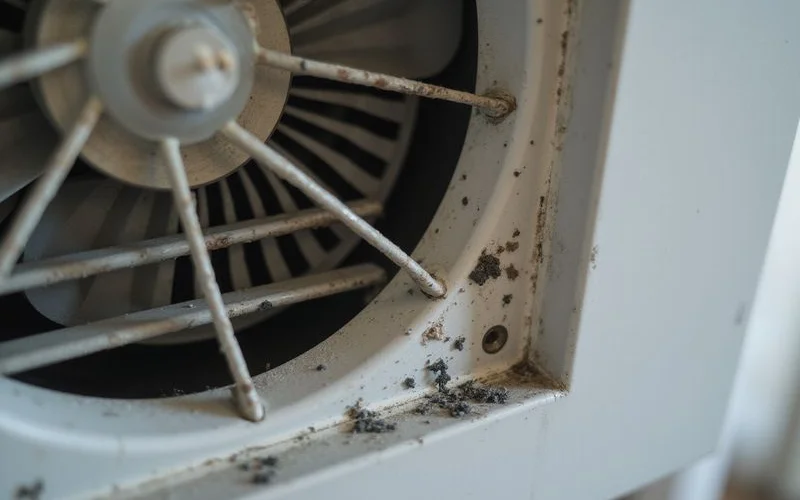
The three main sources
An aircon foul smell comes from three specific areas inside your unit. You will usually find a combination of all three by the time the odour becomes obvious in your room.
Here is exactly where the bacteria and fungi hide:
- Mould on the evaporator coil and blower wheel: The damp, dark surface of the coil is ideal for fungal colonies to thrive.
- Stagnant water in the drain pan: Bacteria multiply rapidly in the shallow, standing water trapped beneath the coil.
- Decaying dust and biofilm in the drain line: Organic matter rots inside the pipe and produces sour, swampy odours when the room gets warm.
We find that severe cases in Cheras often involve thick biofilm blockages. This slimy buildup requires high-pressure clearing to remove completely.
Why it’s a health flag (not just an annoyance)
The fan inside your unit disperses whatever is growing on the coil directly into your breathing space. This constant circulation of spores is a documented health hazard under the Malaysian Department of Occupational Safety and Health (DOSH) indoor air quality guidelines.
For many occupants, the initial effects are mild irritation like an itchy throat, sniffles, or headaches.
The situation becomes significantly more dangerous for sensitive individuals. A 2026 report from Hospital Canselor Tuanku Muhriz (HCTM) estimates that two million Malaysians currently suffer from asthma. Half a million of those patients are children.
Breathing in mould spores can directly trigger severe respiratory responses in these vulnerable groups.
We strongly recommend immediate action if you notice any of these warning signs:
- Pre-existing conditions: Anyone in the household has asthma, allergic rhinitis, or chronic allergies.
- Vulnerable occupants: The contaminated air conditioning unit serves a child’s bedroom or a nursery.
- Location-specific sickness: Your physical symptoms ease when you leave the room and return as soon as you go back in.
Our team treats these indoor air quality issues as urgent service calls. You cannot ignore a contaminated system if it affects your daily health.
Why a normal service often doesn’t fix it
A basic service only removes the loose surface dust and washes the easily accessible filters. It completely fails to penetrate the tightly packed coil fins where the actual mould colonies live.
The musty smell might fade for a week after a standard wipe-down.
The surviving mould simply regrows because the root cause was never neutralised. Standard water pressure cannot dissolve the sticky grease and biological matter baked onto the blower wheel.
The only lasting fix is a thorough chemical wash.
This process involves applying an industrial alkaline-based degreaser directly to the internal components. The chemical breaks down the stubborn grime before a sterilising rinse flushes the dead mould out of the system.
We rely on specific alkaline cleaners for units across Selangor because they strip away heavy grease without corroding the delicate copper coils. This targeted chemical reaction is what actually stops the smell at its source.
What a proper chemical wash does
A proper chemical treatment systematically dismantles and sterilises every single part where water collects and bacteria breed. This deep cleaning directly targets the hidden areas that standard wiping misses.
For a smell-driven service, the procedure requires several critical steps.
The Deep Cleaning Process
Our technicians execute a strict protocol to guarantee the removal of all odour-causing elements. This includes:
- Deep coil degreasing: We use a foaming alkaline cleaner to penetrate the deep layers of the coil, rather than just washing the surface.
- Blower wheel extraction: This cylinder is often the dirtiest part and requires dedicated scrubbing to remove caked-on fungal matter.
- Drain pan sterilisation: We scrub the pan manually and follow up with an anti-bacterial rinse to kill standing germs.
- Complete drain line flush: High-pressure water pushes the decaying biofilm all the way through the pipe to the outdoor outlet.
- Anti-microbial coating: An optional protective spray can be applied to delay future bacterial growth.
Most “dirty sock syndrome” complaints are entirely resolved by a single session of this treatment.
We occasionally encounter severely neglected units where the coil has heavily degraded. These extreme cases in high-humidity areas require a complete chemical overhaul, which involves fully dismantling the unit to achieve a lasting result.
Preventing the smell coming back
Regular quarterly servicing is the most effective way to keep your coil and drain free from persistent mould. Consistent maintenance prevents the biological buildup from ever reaching a critical, smelly stage.
You should also manage how you operate the system, especially during Malaysia’s heavy monsoon periods.
Leaving a unit completely unused for weeks during the wet season traps moisture inside the dark plastic casing. Running the air conditioner daily, even for just twenty minutes, forces air circulation and helps the internal coil dry out properly.
Daily Moisture Management
Our team always recommends a simple habit for units in guest rooms or spaces you rarely use. Before shutting the system down completely, switch the remote to “fan-only” mode for about thirty minutes.
This straightforward step blasts room-temperature air across the wet evaporator coil.
The blowing air evaporates the residual condensation left over from the cooling cycle. You are essentially starving the bacteria of the stagnant water they need to survive.
If you need help addressing a stubborn odour, contact a licensed professional to inspect your system and restore your indoor air quality today.
Related reading: For the next step, book our aircon repair team, or read our guide on Aircon Error Codes Explained: Daikin, Panasonic & Acson Blinking Lights.